
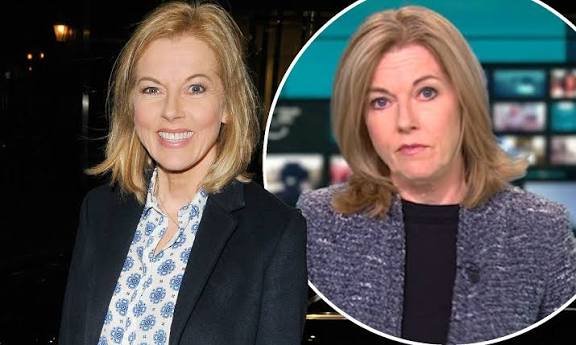
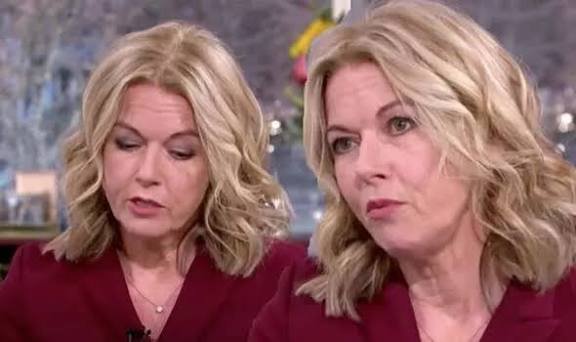
Mary Nightingale remains a familiar face on British television.
However, claims about her health need careful fact-checking.
The short answer: there is no verified public evidence of a serious illness affecting Mary Nightingale. ITV still lists her as an ITV Evening News presenter.
At a Glance
| Detail | Verified Information |
|---|---|
| Full Name | Mary Louise Nightingale |
| Born | May 26, 1963 |
| Birthplace | Scarborough, Yorkshire, England |
| Profession | Journalist and television presenter |
| Main Employer | ITV News |
| Best Known For | ITV Evening News |
| Husband | Paul Fenwick |
| Marriage | April 2000 |
| Children | Two |
| Major Awards | TRIC Newscaster of the Year, 2002 and 2004 |
| Current Public Role | ITV Evening News presenter |
Her birth and career details are documented by biographical sources.
Does Mary Nightingale Have an Illness?
There is currently no confirmed diagnosis publicly disclosed by Nightingale.
More importantly, ITV’s own presenter profile remains active. It identifies her as a presenter of the ITV Evening News.
That matters when discussing celebrity health.
A health claim needs more than online discussion.
It needs evidence from a reliable source.
At present, there is no credible public statement confirming cancer, a chronic disease, or another serious condition.
Therefore, claims describing a specific diagnosis should be treated as unverified.
Health Claim Check
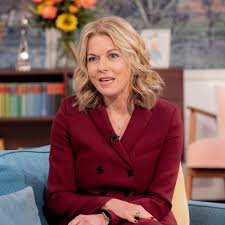
| Online Claim | Evidence Status |
|---|---|
| Mary has cancer | Not publicly confirmed |
| Mary has a serious chronic illness | Not publicly confirmed |
| Mary left ITV because of illness | Not supported by ITV |
| Mary continues presenting | Confirmed by ITV |
| A deepfake used her likeness | Confirmed |
| The deepfake proved a health problem | False |
This distinction is important because repeated online claims can look factual.
Repetition does not turn an allegation into evidence.
The Deepfake Incident Changed the Conversation
One unusual event deserves attention.
In February 2024, a fake video used Mary Nightingale’s likeness.
It made her appear to promote an investment application.
The footage was AI-generated and circulated on social media.
Nightingale later spoke publicly about the incident.
She said the experience made her extremely angry.
She also described it as identity theft.
This incident is important for another reason.
It showed how easily viewers can be misled by synthetic media.
The fake video copied her appearance and broadcast environment.
It was designed to look like genuine television footage.
However, the deepfake had nothing to do with an illness.
It was a technology and fraud issue.
That distinction should remain clear in any article about her health.
Why Health Rumours Can Become Difficult to Verify
Television presenters live under unusual public scrutiny.
Viewers see their faces and voices repeatedly.
Small changes can therefore attract attention.
A different hairstyle can trigger online speculation.
A tired appearance can produce similar reactions.
A temporary absence can also create questions.
None of those observations proves a medical diagnosis.
The situation becomes more complicated when search engines connect unrelated stories.
Mary has reported extensively on major health stories.
That includes stories involving prominent public figures.
Her professional reporting should never be confused with her personal health.
This is one reason health-related searches require extra caution.
Mary Nightingale’s Career Provides Important Context
Nightingale has built a long career in broadcasting.
She began in business journalism before becoming a familiar television presenter.
Her early work included TV Tokyo’s World Business Satellite.
She later worked for BBC World Service Television.
She also presented for Reuters Financial Television.
Her career then expanded into mainstream television.
She presented programmes including Ski Sunday and Wish You Were Here…?.
She also worked on London Tonight and other ITV programmes.
In 2001, she moved into a major ITV news role.
That position became the defining part of her career.
ITV says she has presented the ITV Evening News for many years.
The broadcaster also highlights her award-winning journalism.
A Career Built Around Major National Stories
Nightingale has covered many major events during her career.
Her journalism has included elections, royal events, and major investigations.
One particularly significant assignment involved Madeleine McCann’s disappearance.
Nightingale later wrote about interviewing Gerry and Kate McCann.
She said the story created unusually strong public emotions.
Her work has therefore involved demanding news environments.
That professional history helps explain her public profile.
It also explains why inaccurate information about her can spread quickly.
Her Awards Show Her Standing in British Broadcasting
Nightingale has received major recognition for her journalism.
She won the TRIC Newscaster of the Year award in 2002.
She won the same award again in 2004.
These awards came relatively early in her national news career.
They helped establish her as a respected broadcaster.
Her ITV profile still highlights these two awards today.
Personal Life and Privacy
Nightingale married television producer Paul Fenwick in April 2000.
Public biographical sources report that they have two children.
However, detailed information about her children is not necessary here.
Their identities and private lives should remain protected.
The same principle applies to medical information.
If a person has not publicly confirmed a diagnosis, it should not be presented as fact.
What About Her Current Health Status?
The most responsible answer is simple.
There is no publicly verified serious illness to report.
ITV continues to identify Nightingale as an ITV Evening News presenter.
She has also continued appearing in ITV journalism.
Her recent work includes interviews and coverage of major national stories.
That does not prove someone has perfect health.
It does show that claims of a major career-ending illness lack public confirmation.
What Readers Should Take Away
- No serious illness has been officially confirmed.
- Cancer claims are not supported by reliable public evidence.
- ITV continues to list her as a presenter.
- Her 2024 deepfake was genuine, but unrelated to illness.
- Her medical privacy should be respected.
- Unverified social-media claims should not be treated as diagnoses.
The Bigger Story Behind “Mary Nightingale Illness”
The more interesting story may not be about illness at all.
It is about how modern misinformation affects journalists.
Nightingale became the subject of an AI-generated impersonation.
The fake footage copied her professional identity.
For a news presenter, that creates a serious problem.
Trust is central to broadcast journalism.
A fake video can therefore damage professional credibility.
It can also confuse viewers about what actually happened.
Her experience offers a useful lesson for readers.
A dramatic health claim needs a verifiable source.
If ITV has not confirmed it, and Nightingale has not confirmed it, caution is necessary.
Mary Nightingale Illness: Final Verdict
There is no verified public evidence that Mary Nightingale currently has a serious illness.
Her ongoing ITV role is confirmed by the broadcaster.
Her 2024 deepfake incident is also confirmed.
But that incident involved AI impersonation, not a medical condition.
So, for now, the safest conclusion is clear:
Mary Nightingale’s reported illness remains unconfirmed.
Readers should avoid articles claiming a specific diagnosis without credible evidence.
Sources Used
- ITV News — Mary Nightingale profile
- ITV News — Mary Nightingale deepfake report
- ITV News — Mary Nightingale on the McCann case
- The Guardian — Mary Nightingale interview
- TV Newsroom — Mary Nightingale biography
Read more :Paris Hilton Net Worth: How She Built Her Own Business Empire